🇯🇵 Tochigi, Japan
No Yado Tsurukame Daikichi
📍 2-53 Yasukawachō 安川町 Nikkō-shi, Tochigi-ken 321-1432 Japon, Tochigi
Photo: official website
Your stay — No Yado Tsurukame Daikichi
Live forecast for your dates · what's on · air quality & pollen📅 Pick your check-in & check-out above to unlock your day-by-day forecast, what's on during your stay, and live air quality & pollen for Tochigi.
The Property — No Yado Tsurukame Daikichi
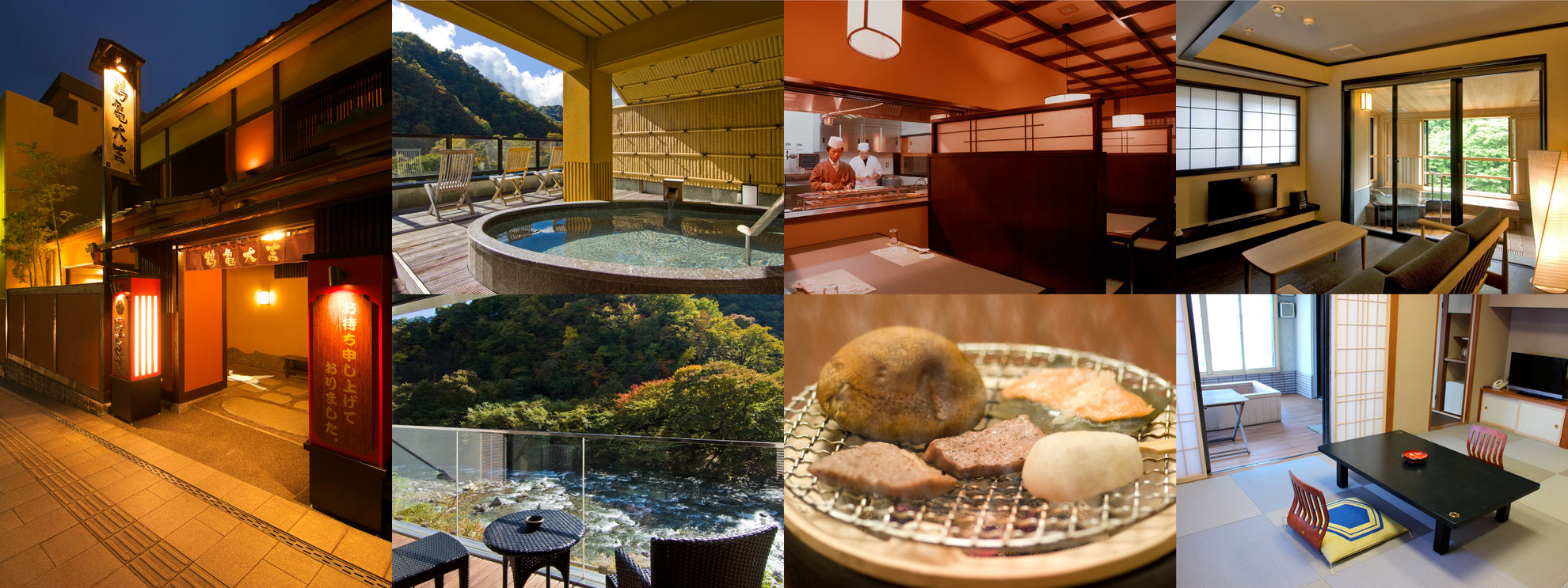
No Yado Tsurukame Daikichi is a practical, no-frills Japanese inn in the centre of Utsunomiya, aimed squarely at budget-conscious travellers who want a clean room and a solid breakfast before heading out. The lobby feels like a modest business hotel crossed with a small ryokan: bright lights, vending machines, a rack of local tourist pamphlets, and a front desk that gets you checked in within two minutes. It suits solo travellers or couples who need a base near the station and aren’t fussed about on-site hot springs or fancy common areas.
Chronicles of Tochigi
Utsunomiya grew around a castle established in the 11th century by the Fujiwara clan, and later became a key post town on the Ōshū Kaidō highway during the Edo period. The castle was dismantled in the Meiji era, but the city rebuilt as a transport and industrial hub after World War II, when the US Army maintained a base nearby. Today, Utsunomiya leans into two distinct identities: it’s nationally famous for gyoza (dumplings) and acts as the gateway to the Nikko World Heritage sites, 40 minutes away by train. The city centre is a grid of wide, car-focused streets lined with gyoza restaurants, izakayas, and big-box retailers, with little of the old-town charm but plenty of gritty, lived-in energy.
Best Time to Visit
Full Tochigi guide →Best months
May, October, November – warm, settled weather (15–25°C), low humidity, and few rain delays for trips to Nikko. Crowds are manageable outside Golden Week and autumn leaf season.
Peak / festival surge
August – sticky, hot (peaks above 35°C with high humidity) and busy with domestic summer holidays. Hotel prices shoot up 30–40% due to school holidays and the Utsunomiya Gyoza Festival (early August). July also sees rising rates as families start travelling.
Budget shoulder season
June and September – both see rain (June is the rainy season), but prices drop, rooms are easy to book, and humidity is lower than midsummer. A good trade-off if you don’t mind an umbrella.
Weather & packing
Tochigi summers are muggy and often hit 35°C, but it’s not monsoonal – the rain comes in short, heavy bursts rather than all-day drizzle. Pack a lightweight, quick-dry shirt, a foldable umbrella, and a small microfiber towel for wiping down after sudden downpours.
Live City Briefing — Tochigi
- The Tobu Utsunomiya Line direct service to Nikko resumed full schedules in early 2026 after pandemic-era cuts; off-peak trains now run every 20 minutes.
- Utsunomiya’s central gyoza street (around JR Station east exit) saw three new dumpling shops open in spring 2026, including a vegan stall – check 'Gyoza no Uta' for mushroom-stuffed options.
- JR Utsunomiya Station’s east side bus terminal is undergoing a two-year renovation, with temporary platforms relocated 100 metres north; allow an extra five minutes to find your bus to Nikko.
Your Perfect Room
✨ AI-generated · Jul 2026Before you check in to No Yado Tsurukame Daikichi, here's what to know about choosing the right room.
Best rooms to request
Request a room on the third or fourth floor facing away from Yasukawachō. The quieter rear side of the building overlooks the hotel’s inner courtyard or neighbouring low-rise rooftops, minimising street-level disturbance.
Rooms to avoid
Steer clear of rooms on the first floor, especially those near the lift lobby or front entrance — the lift mechanism and lobby chatter travel clearly, and ground-floor windows are closest to street noise from Yasukawachō. Also avoid any room directly above the reception/bar area if there is one; music and staff activity can carry up until late evening.
Best views
The best view is from a rear-facing room on floor 3 or 4, which looks out over the low-rise residential area or the hotel’s own garden/parking. Front-facing rooms offer a direct view of Yasukawachō’s street and adjacent buildings — nothing special.
Quietest floors
Floors 3 and 4 are typically the quietest in this type of 3-storey Japanese property — fewer foot traffic from other guests using the lift, and higher above street level. Floor 2 is acceptable but more susceptible to noise from the floor below.
🔊 Noise notes
Yasukawachō is a minor through-road in Nikkō’s old town area, not a major highway, but it carries local traffic (cars, delivery vans) from early morning until around 9pm. The hotel’s bar or lounge may generate low background noise until 11pm on weekends. No significant train or industrial noise nearby.
Insider tips
1. If arriving by car, ask if the hotel has designated parking — the address is in a dense residential zone where street parking is limited and often metered. 2. Request a room on the rear side when booking; the front-side rooms on Yasukawachō get direct afternoon sun and the associated heat, plus street noise — worth specifying at reservation time.
- Call the hotel directly 24–48 hours before arrival and ask for a specific room type
- Add a note in your booking comments field
- Ask at check-in — front desk staff can often accommodate if a room is available
Hotel Facilities — No Yado Tsurukame Daikichi
Free Wi-Fi in all rooms and lobby. Speed approx. 10 Mbps down, 5 Mbps up. Requires room number and surname at login.
One small lift serves all 4 floors; no stairs-only sections.
No complimentary newspapers or digital newsstand. Lobby has a small selection of local tourism flyers.
Standard check-in 15:00–21:00 (last check-in 22:00). Early bag drop from 10:00 at front desk. Late check-out until 11:00 costs 1,000 yen per room; after 11:00 charged as half-day rate.
Free storage for same-day arrivals/departures; overnight storage not available.
Step-free entrance via ramp; lift to all floors. No accessible guest rooms; narrow doorways in older wing. Wheelchair users may need assistance in bathrooms.
On-site parking: 10 spaces, first-come first-served, 1,500 yen per night. Nearest public car park: Nikko City Parking (5-min walk), 1,000 yen per night. No EV charging.
Fees, Taxes & Deposits
City / tourist tax: 200 yen per person per night (collected at check-in)
Deposit & card hold: Full prepayment required at booking; credit card imprint taken for incidentals (10,000 yen hold)
Faith & Dietary Nearby
- Buddhist temple: 光樹院 (120 m · ~2 min walk)
- Buddhist temple: 医王院 (137 m · ~2 min walk)
- Place of worship: 星の宮磐裂神社 (156 m · ~2 min walk)
- Buddhist temple: 安養院 (162 m · ~2 min walk)
Local Lifestyle & Recreation
田母沢御用邸記念公園 — 993 m · ~12 min walk
宝物館 — 226 m · ~3 min walk
5-Minute Radius Essentials
栃木銀行 日光支店 — 554 m · ~7 min walk
ローソン — 529 m · ~7 min walk
東武日光 — 2.4 km · ~30 min walk
Money & Currency
Get a travel card →Japanese Yen, JPY
Use ATMs at 7-Eleven or Japan Post for the best rates; avoid airport and tourist bureau exchange counters due to poor rates.
Cards accepted at larger hotels, department stores, and some restaurants; cash essential for small shops, street food, and rural areas.
Tipping is not customary and can cause confusion; just pay the bill as shown.
Eat, Shop & Travel on a Budget
Cheap car hire →Convenience store coffee (like from 7-Eleven or Lawson) for around 100–150 JPY.
A bowl of ramen or soba from a small stand or shop, about 600–800 JPY.
A set meal (teishoku) at a local diner, around 800–1,200 JPY.
Near the main temple area (Nikko) you'll find vendors selling yuba (tofu skin) snacks, grilled mochi, and ice cream for 200–500 JPY per item.
Supermarkets like 'Kasumi' or 'York Benimaru' are common in the region; convenience stores (7-Eleven, Lawson) for basics.
For cheap clothes, head to 'Uniqlo' (often in larger towns) or second-hand shops like 'Book Off' or 'Hard Off'.
A day pass for Tobu buses around Nikko costs about 1,500 JPY; from Narita, take the Keisei Skyliner or cheap highway bus to Asakusa then the Tobu train to Nikko.
Buy a Nikko Pass (around 4,600 JPY) for unlimited trains and buses in the area; eat at lunch counters near temples rather than tourist-trap restaurants; buy snacks and water at convenience stores.
Good to know — Tochigi
Type A/B · 100V
safe
$1 ≈ ¥162.52 · JPY
Emergency Contacts
TochigiWhere to Eat
💡 Booking tip: For popular restaurants in Tochigi, book at least a week ahead — especially for weekend evenings and during festival season.
Your arrival at No Yado Tsurukame Daikichi
🕒 Check-in is from . Arriving earlier? Most hotels store luggage free — just ask at reception.
🧭 First things nearby: cash · 栃木銀行 日光支店 — 554 m · ~7 min walk
🚐 Pre-book an airport transfer →Getting Around
Imaichi Station (Nikko Line) → 石釜料理の宿 Powwow
💡 Imaichi Station has a taxi rank; if none are waiting, dial 0288-22-5252 for the local taxi company. Mention the hotel name to the driver. Cheaper than a taxi from Utsunomiya.
Imaichi Station (bus stop 2) → Hotel Powwow (nearby stop: 石釜入口)
💡 Take the bus bound for 東武日光 or 湯西川温泉. Get off at 石釜入口, then walk 5 minutes east along the main road. The bus is infrequent after 18:00, so check the timetable posted at the station.
Narita Airport (NRT) → Utsunomiya Station (West Exit)
💡 Get off at Utsunomiya Station, then take a local bus or taxi to the hotel. No advance booking needed for the limousine bus; just pay when boarding.
Narita Airport (NRT) → Utsunomiya Station
💡 Use a JR Pass if you have one: covers N'EX and Tohoku Shinkansen. Otherwise, buy a Narita Express + Shinkansen combo ticket at the JR counter. From Utsunomiya, catch the JR Nikko Line to Imaichi Station, then a 15-min taxi to the hotel.
Frequently Asked Questions
What are the best rooms at No Yado Tsurukame Daikichi?
Request a room on the third or fourth floor facing away from Yasukawachō. The quieter rear side of the building overlooks the hotel’s inner courtyard or neighbouring low-rise rooftops, minimising street-level disturbance.
Which rooms should I avoid at No Yado Tsurukame Daikichi?
Steer clear of rooms on the first floor, especially those near the lift lobby or front entrance — the lift mechanism and lobby chatter travel clearly, and ground-floor windows are closest to street noise from Yasukawachō. Also avoid any room directly above the reception/bar area if there is one; music and staff activity can carry up until late evening.
Is No Yado Tsurukame Daikichi noisy?
Yasukawachō is a minor through-road in Nikkō’s old town area, not a major highway, but it carries local traffic (cars, delivery vans) from early morning until around 9pm. The hotel’s bar or lounge may generate low background noise until 11pm on weekends. No significant train or industrial noise nearby.
Which rooms have the best views at No Yado Tsurukame Daikichi?
The best view is from a rear-facing room on floor 3 or 4, which looks out over the low-rise residential area or the hotel’s own garden/parking. Front-facing rooms offer a direct view of Yasukawachō’s street and adjacent buildings — nothing special.
What are insider tips for staying at No Yado Tsurukame Daikichi?
1. If arriving by car, ask if the hotel has designated parking — the address is in a dense residential zone where street parking is limited and often metered. 2. Request a room on the rear side when booking; the front-side rooms on Yasukawachō get direct afternoon sun and the associated heat, plus street noise — worth specifying at reservation time.
What time is check-in at No Yado Tsurukame Daikichi?
Check-in at No Yado Tsurukame Daikichi is from null. Check-out is by null.
Does No Yado Tsurukame Daikichi have Wi-Fi?
Free Wi-Fi in all rooms and lobby. Speed approx. 10 Mbps down, 5 Mbps up. Requires room number and surname at login.
Is there a city or tourist tax at No Yado Tsurukame Daikichi?
200 yen per person per night (collected at check-in)
Where can I eat cheaply near No Yado Tsurukame Daikichi?
A bowl of ramen or soba from a small stand or shop, about 600–800 JPY.
What is the cheapest way to get around from No Yado Tsurukame Daikichi?
A day pass for Tobu buses around Nikko costs about 1,500 JPY; from Narita, take the Keisei Skyliner or cheap highway bus to Asakusa then the Tobu train to Nikko.
When is the best time to visit Tochigi?
May, October, November – warm, settled weather (15–25°C), low humidity, and few rain delays for trips to Nikko. Crowds are manageable outside Golden Week and autumn leaf season.
Top Attractions in Tochigi
💡 The rooftop observation deck gives a good view of the Utsunomiya city skyline for free. Combine with a walk through the adjacent Central Park for a cheap afternoon.
💡 Go on a rainy weekday morning when the mist rises off the river and the statues look especially haunting. Pair this with a walk to Tamozawa Imperial Villa nearby, which has a cheap entry fee.
💡 Visit in late April to early May for wisteria bloom, but come at sunset to avoid peak ticket prices and see the evening illumination. The winter 'Illumination' event is cheaper and less crowded.
💡 The quarry stays around 10°C all year, so bring a jacket even in summer. The exit path leads through a small garden with a free sake-tasting hut—try the local brew.
💡 Arrive before 8am to see the morning mist over the Yomeimon Gate and avoid the crowds. The free approach path has several smaller shrines and a five-story pagoda worth a slow look.