🇯🇵 Tokyo, Japan
ONE@Tokyo
📍 墨ç°åºæ¼ä¸1-19-3, æ±äº¬, 131-0045
Photo: official website
Your stay — ONE@Tokyo
Live forecast for your dates · what's on · air quality & pollen📅 Pick your check-in & check-out above to unlock your day-by-day forecast, what's on during your stay, and live air quality & pollen for Tokyo.
The Property — ONE@Tokyo
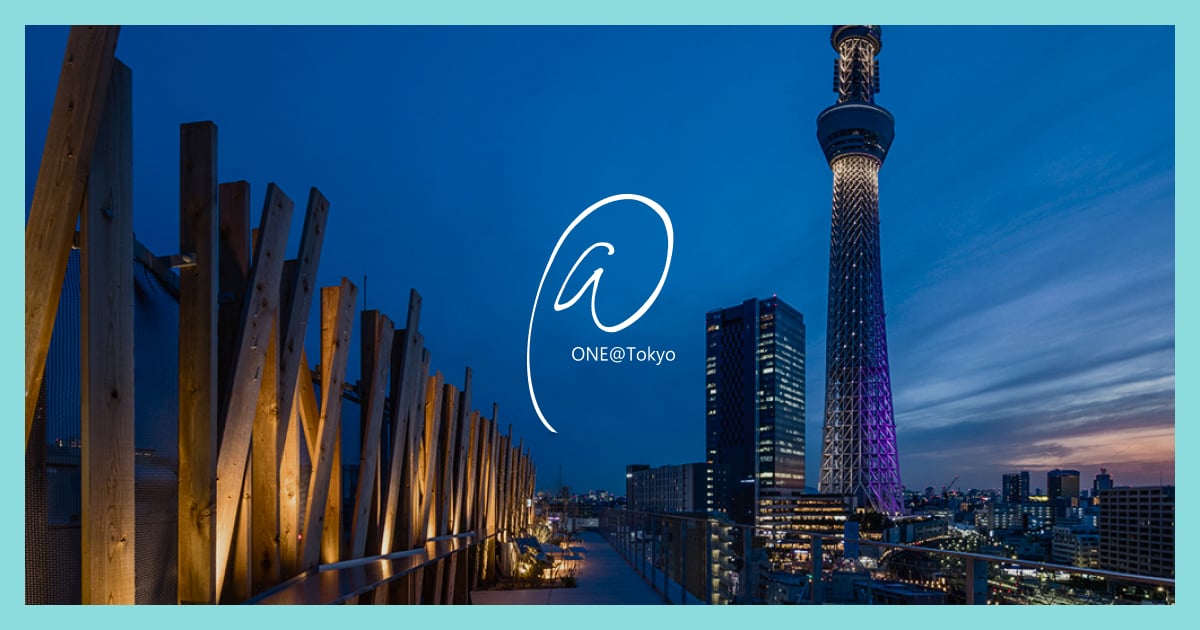
ONE@Tokyo is a three-star design hotel in Oshiage, a five-minute walk from the Skytree. The lobby is a clean, industrial-chic space with exposed concrete, a check-in counter of stacked timber logs, and a small library lounge. It’s essentially a functional base for independent travellers who want direct access to Tokyo Skytree Station and the Tobu bus to Narita. The rooftop deck—open to guests—gives you an unobstructed view of the tower at night, which is the USP: a genuinely decent skyline spot without paying for a fancy bar.
Chronicles of Tokyo
Tokyo started as the small fishing village of Edo before Tokugawa Ieyasu made it the shogunate’s capital in 1603. The city was rebuilt twice in the 20th century: after the 1923 Great Kantō earthquake and after the US firebombing of World War Two. Post-war reconstruction created the dense, low-rise neighbourhoods of wooden houses, then the bubble economy of the 1980s pushed up a ring of skyscrapers in Shinjuku and beyond. Today Tokyo is a hyper-efficient megacity where centuries-old temples sit next to neon-lit arcades, and local identity is defined by the ward you live in—each with its own market, festival and pace. The 2020 Olympics accelerated infrastructure upgrades, including the new Shibuya Sky deck and expanded Haneda services.
Best Time to Visit
Full Tokyo guide →Best months
March-April for cherry blossom (sakura) in Ueno Park and along the Sumida River, plus mild 10-18°C weather; November for clear skies, autumn leaves and fewer tourists than spring.
Peak / festival surge
Late March to early April (sakura season) is the busiest; hotel prices can double. The Sumida River fireworks festival (last Saturday of July) also spikes demand, but the hotel’s Oshiage location means you can watch from the rooftop.
Budget shoulder season
May and October offer pleasant 18-25°C weather, lower room rates, and shorter queues at Skytree and Sensō-ji. September can still be hot and humid but is quiet due to typhoon season.
Weather & packing
Tokyo’s July is relentlessly humid and hot (28-32°C), with sudden downpours from typhoon season. Pack a lightweight, quick-dry umbrella and avoid 100% cotton clothing—synthetic or merino layers dry faster in the sticky air.
Live City Briefing — Tokyo
- The renovation of Asakusa's Sensō-ji temple grounds (main hall scaffolding) continues through 2026; the outer market stalls are open but the hall's west facade is covered.
- New direct buses from Tokyo Skytree Station (3-minute walk from the hotel) to Haneda Airport started in March 2025, making a Narita-or-Haneda choice easier for travellers.
- Tokyo's summer 'seasonal appeal' is the evening fireworks along the Sumida River (July 25, 2026) – the hotel's location is prime for viewing, but expect the area to be crowded from 5pm.
Your Perfect Room
✨ AI-generated · Jul 2026Before you check in to ONE@Tokyo, here's what to know about choosing the right room.
Best rooms to request
Request a high-floor room on the east side (even-numbered rooms) to overlook the Sumida River and avoid the elevated highway noise from Route 6 directly south. Rooms on floors 8–14 have the best balance of quiet and skyline view.
Rooms to avoid
Rooms on floors 1–3 facing south (street side) are closest to traffic and the hotel entrance, making them noticeably noisier. Corners beside the lift shaft on floors 4–7 can get lift rumble.
Best views
From east-facing rooms (even numbers) on floors 8+, you get a clear view of the Sumida River and, on clear days, a sliver of Tokyo Skytree rising above the riverside buildings. North-facing rooms see the Skytree directly but also the nearby railway line.
Quietest floors
Floors 9 through 14, especially rooms on the east or north side.
🔊 Noise notes
The hotel sits at the junction of Meiji-dori (major arterial) and a local side street. South-facing rooms get constant road rumble from elevated motorway traffic. The nearby Keisei railway line runs north-south about 200m east; trains pass every few minutes, audible in east-facing rooms on low floors. The hotel’s own entrance and taxi drop-off point is directly below south-facing rooms on floors 1–3.
Insider tips
If you’re a light sleeper, ask for a room on floor 10 or above, east-facing — the river acts as a sound buffer. The hotel has a compact automated check-in kiosk; arrive after 3pm to avoid queueing with tour groups. No on-site parking, but the Oshiage Station ramp parking costs ¥300/hour; bikes are easier.
- Call the hotel directly 24–48 hours before arrival and ask for a specific room type
- Add a note in your booking comments field
- Ask at check-in — front desk staff can often accommodate if a room is available
Hotel Facilities — ONE@Tokyo
Free Wi-Fi throughout; average speed around 30 Mbps; no login required, just select the network
Two passenger lifts serving all guest floors (6-10); no stairs-only sections
No physical newspapers or digital newsstand; lobby has a TV and small library of travel/manga books
Standard check-in from 15:00; early bag drop allowed from 10:00 at front desk; late check-out until 12:00 costs 1,000 JPY, after 12:00 charged per hour at 1,000 JPY
Free storage at front desk for same-day arrivals/departures; cannot hold luggage overnight without a booking
Step-free access via ramp at main entrance; one wheelchair-accessible room on 6th floor; narrow lifts may not fit all large power chairs
No on-site parking; nearest public car park is Times Oshiage Station South (3-min walk) charging 300 JPY per 30 min, max 1,500 JPY per night; no EV charging
Fees, Taxes & Deposits
City / tourist tax: 200 JPY per person per night for stays over 10,000 JPY; otherwise 100 JPY per person per night
Deposit & card hold: No advance deposit required; a credit card imprint or 5,000 JPY cash hold at check-in for incidentals
Faith & Dietary Nearby
- Buddhist temple: 円通寺 (337 m · ~4 min walk)
- Place of worship: 飛木稲荷神社 (339 m · ~4 min walk)
- Place of worship: 乾徳稲荷神社 (377 m · ~5 min walk)
- Buddhist temple: 正観寺 (403 m · ~5 min walk)
Local Lifestyle & Recreation
浅草エキミセ — 2.1 km · ~26 min walk
わんぱく天国 — 394 m · ~5 min walk
郵政博物館 — 463 m · ~6 min walk
きらきら会館 — 1.1 km · ~13 min walk
亀戸三丁目第3児童遊園 — 1.2 km · ~15 min walk
5-Minute Radius Essentials
Nearest — 1.3 km · ~16 min walk
くすりの福太郎 — 49 m · ~1 min walk
セブン-イレブン — 109 m · ~1 min walk
押上〈スカイツリー前〉 — 385 m · ~5 min walk
Money & Currency
Get a travel card →Japanese Yen, JPY
Use ATMs at 7-Eleven or Japan Post for the best rates; avoid airport and hotel exchange counters which have poor rates.
Credit cards are widely accepted in chain stores, restaurants, and transport; smaller shops and markets often prefer cash, and contactless (Suica/Pasmo) works on trains and vending machines.
Tipping is not customary; leave no tip in restaurants, taxis, or hotels—just say 'thank you'.
Eat, Shop & Travel on a Budget
Cheap car hire →Convenience store drip coffee (like at FamilyMart or Lawson) costs around ¥100–150, or a small canned coffee from a vending machine for about ¥120.
A bowl of ramen or a gyudon (beef bowl) from a chain like Yoshinoya or Matsuya will run ¥400–600.
A set meal (teishoku) or katsu curry at a local eatery typically costs ¥700–1,000 for a main.
Nearby Ōtsuka Station area has several cheap izakaya and yakitori stalls; also look for supermarket bento boxes around ¥300–500 from Seiyu or Life.
Discount supermarkets like Seiyu (big chain) and smaller Don Quijote stores, plus local greengrocers and fishmongers along side streets.
Uniqlo is common for basics; also check Book Off for secondhand clothes, and the Any Department Store in Sugamo for bargain streetwear.
A Tokyo Metro 24-hour pass costs ¥600; from Narita, take the Keisei Access Express to Nippori (about ¥1,200) then local JR to Ōtsuka; from Haneda, take the Keikyu Line to Shinagawa (¥300) then JR.
Good to know — Tokyo
Type A/B · 100V
safe
$1 ≈ ¥161.88 · JPY
Emergency Contacts
TokyoIn Japan, dial 110 for police and 119 for ambulance/fire services. English-speaking operators may be available. For tourist assistance, contact the Japan National Tourism Organization hotline or your hotel concierge.
💡 Save these numbers in your phone. In life-threatening emergencies, call immediately.
Where to Eat
💡 Booking tip: For popular restaurants in Tokyo, book at least a week ahead — especially for weekend evenings and during festival season.
Your arrival at ONE@Tokyo
🕒 Check-in is from . Arriving earlier? Most hotels store luggage free — just ask at reception.
🧭 First things nearby: cash · Nearest — 1.3 km · ~16 min walk — pharmacy · くすりの福太郎 — 49 m · ~1 min walk
🚐 Pre-book an airport transfer →Getting Around
Narita International Airport → Palace Hotel Tokyo
💡 Most expensive but fastest during off-peak. Use Nihongo taxi counters or pre-book via hotel for best rates.
Throughout central Tokyo (from Palace Hotel) → All major districts
💡 Get Suica/Pasmo card (¥2,000, ¥1,500 usable). Marunouchi Line platform is directly below hotel. Fastest local transit.
Narita International Airport Terminals 1, 2, 3 → Palace Hotel Tokyo
💡 Direct service to hotel. No transfers needed. Book online for ¥2,600. Luggage handling included.
Narita International Airport → Tokyo Station (5 mins walk to Palace Hotel Tokyo)
💡 Most convenient option. Buy a round-trip ticket for ¥5,070. Hotel concierge can arrange return booking.
About Tokyo
Wikipedia ↗
Tokyo, officially the Tokyo Metropolis, is the capital and most populous city of Japan. The population of the city proper was over 14 million as of 2023. The Greater Tokyo Area, which includes Tokyo and parts of six neighboring prefectures, is the third-most populous metropolitan area in the world, ...
Frequently Asked Questions
What are the best rooms at ONE@Tokyo?
Request a high-floor room on the east side (even-numbered rooms) to overlook the Sumida River and avoid the elevated highway noise from Route 6 directly south. Rooms on floors 8–14 have the best balance of quiet and skyline view.
Which rooms should I avoid at ONE@Tokyo?
Rooms on floors 1–3 facing south (street side) are closest to traffic and the hotel entrance, making them noticeably noisier. Corners beside the lift shaft on floors 4–7 can get lift rumble.
Is ONE@Tokyo noisy?
The hotel sits at the junction of Meiji-dori (major arterial) and a local side street. South-facing rooms get constant road rumble from elevated motorway traffic. The nearby Keisei railway line runs north-south about 200m east; trains pass every few minutes, audible in east-facing rooms on low floors. The hotel’s own entrance and taxi drop-off point is directly below south-facing rooms on floors 1–3.
Which rooms have the best views at ONE@Tokyo?
From east-facing rooms (even numbers) on floors 8+, you get a clear view of the Sumida River and, on clear days, a sliver of Tokyo Skytree rising above the riverside buildings. North-facing rooms see the Skytree directly but also the nearby railway line.
What are insider tips for staying at ONE@Tokyo?
If you’re a light sleeper, ask for a room on floor 10 or above, east-facing — the river acts as a sound buffer. The hotel has a compact automated check-in kiosk; arrive after 3pm to avoid queueing with tour groups. No on-site parking, but the Oshiage Station ramp parking costs ¥300/hour; bikes are easier.
What time is check-in at ONE@Tokyo?
Check-in at ONE@Tokyo is from null. Check-out is by null.
Does ONE@Tokyo have Wi-Fi?
Free Wi-Fi throughout; average speed around 30 Mbps; no login required, just select the network
Is there a city or tourist tax at ONE@Tokyo?
200 JPY per person per night for stays over 10,000 JPY; otherwise 100 JPY per person per night
Where can I eat cheaply near ONE@Tokyo?
A bowl of ramen or a gyudon (beef bowl) from a chain like Yoshinoya or Matsuya will run ¥400–600.
What is the cheapest way to get around from ONE@Tokyo?
A Tokyo Metro 24-hour pass costs ¥600; from Narita, take the Keisei Access Express to Nippori (about ¥1,200) then local JR to Ōtsuka; from Haneda, take the Keikyu Line to Shinagawa (¥300) then JR.
When is the best time to visit Tokyo?
March-April for cherry blossom (sakura) in Ueno Park and along the Sumida River, plus mild 10-18°C weather; November for clear skies, autumn leaves and fewer tourists than spring.
Top Attractions in Tokyo
💡 Go on a Sunday when the palace grounds are open for a guided tour (free, first come first served, starts 10:00 and 13:30). Otherwise the gardens are quiet on weekday mornings.
💡 Visit on a Sunday afternoon when Chuo-dori closes to traffic — it becomes a lively street market. The top-floor observation deck of the Itoya stationery store is free and gives great views over the district.
💡 Bring a picnic and sit by Shinobazu Pond. The lotus flowers in July-August are stunning. Free entry to the Tokyo Metropolitan Art Museum on the first Monday of the month.
💡 Skip the main gate queues. Enter through the side streets off Nakamise-dori for a more local feel. The temple is at its calmest just after sunrise.
💡 Go just before sunset on a weekday. Fewer crowds and the torii gates look fantastic as the light fades. Watch for wedding processions on weekend mornings.
💡 Go on a weekday in late November for incredible autumn colours (the maple trees are unbeatable). The greenhouse is free and often overlooked.