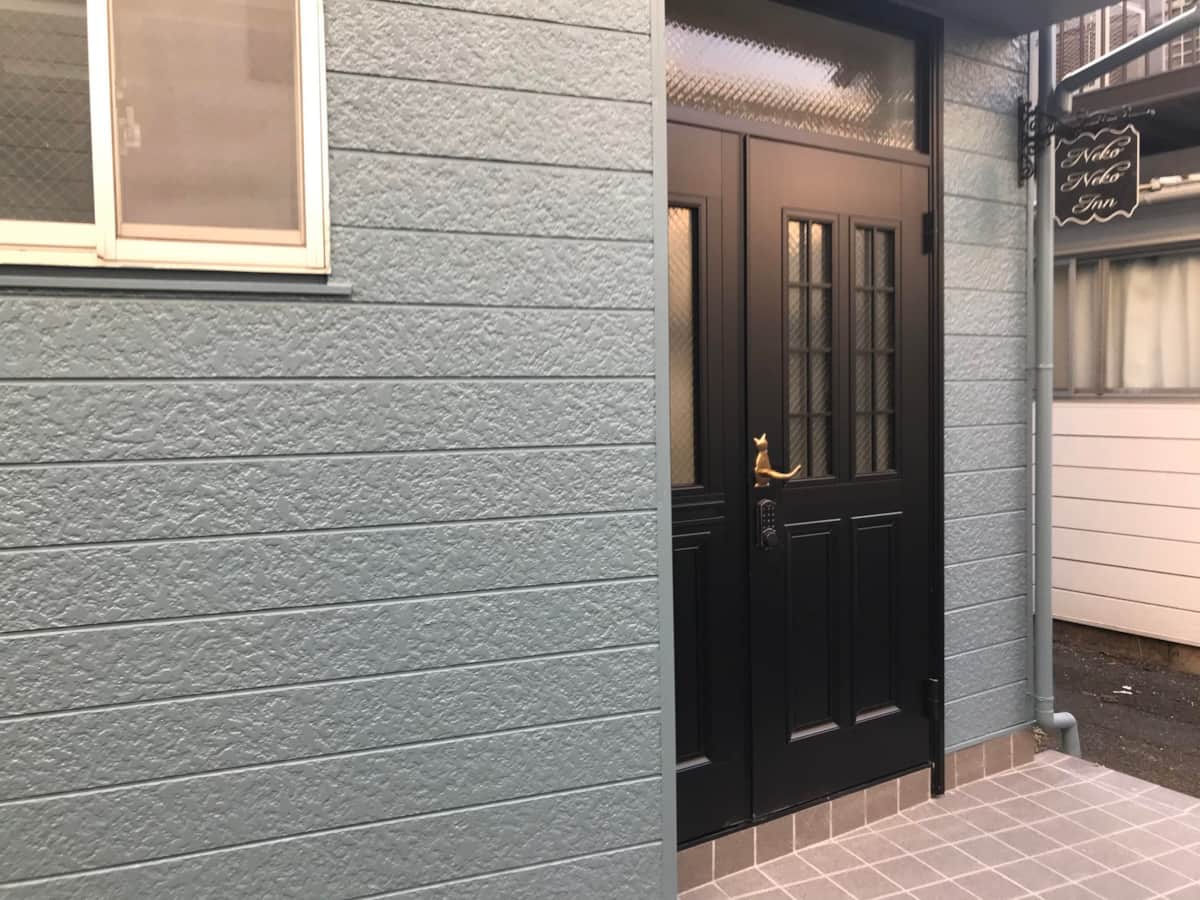
Photo: official website
Your stay — Neko Neko Inn
Live forecast for your dates · what's on · air quality & pollen📅 Pick your check-in & check-out above to unlock your day-by-day forecast, what's on during your stay, and live air quality & pollen for Tokyo.
The Property — Neko Neko Inn
Neko Neko Inn is a cat-themed three-star in Shinjuku, not far from the station. The lobby has framed cat photos, a small shelf of cat books, and a cat-curved reception desk. It’s clean, compact, and functional, best for solo travellers or couples who like a gimmick but don’t need frills. You won’t find a real cat here, but you will find an in-room cat plushie and bedtime stories about Tokyo’s stray cats.
Chronicles of Tokyo
Tokyo began as Edo, a small fishing village that became the shōgun’s seat in 1603. By the 18th century it was one of the world’s largest cities, with a dense grid of wooden buildings and canals. The 1923 Great Kantō earthquake and WWII firebombing levelled most of it, leading to a sharp mid-century rebuild of concrete and glass. Today Tokyo mixes neon-lit commercial blocks with quiet temple enclaves, a city that constantly erases and reinvents itself while keeping small neighbourhood traditions alive.
Best Time to Visit
Full Tokyo guide →Best months
October and November: autumn colours and mild 15-20°C days. Also March and April for cherry blossoms (though April is pricier).
Peak / festival surge
Late March to early April (cherry blossom season) and end of December to early January (New Year). Hotel prices double or triple. Cherry blossom season parks are packed; New Year brings temple crowds and many shops shut for 1-3 days.
Budget shoulder season
May and June: after cherry blossom rush, before summer heat and typhoons. June has rainy season, but it’s less crowded and room rates drop 20-30% from peak.
Weather & packing
Tokyo’s July is hot (28-31°C) and extremely humid, with sudden downpours and occasional typhoon warnings. Pack a lightweight rain jacket that also works as a windbreaker, and breathable, quick-drying clothes – cotton will cling and stay damp.
Live City Briefing — Tokyo
- Shinjuku Gyoen National Garden extended its summer hours from 1 July to 30 September, opening at 9am and closing at 6pm (last entry 5:30pm), perfect for a morning walk before the heat peaks.
- The East Exit of JR Shinjuku Station is midway through a multi-year renovation – expect pedestrian flow changes and occasional platform closures on the Yamanote Line platforms, with large signs directing you via the South Exit tunnel.
- Summer 2026 sees the usual run of limited-time pop-up street food stalls in Yoyogi Park on weekends; check local listings for exact dates, as they can affect nearby foot traffic.
Your Perfect Room
✨ AI-generated · Jul 2026Before you check in to Neko Neko Inn, here's what to know about choosing the right room.
Best rooms to request
Request a room on the 4th or 5th floor facing the inner courtyard (side away from the main street). These floors are high enough to avoid street-level noise but still within the building's quiet mid-range, and the courtyard side buffers traffic sound.
Rooms to avoid
Avoid rooms on the 1st and 2nd floors, especially those facing the street. Street noise from Tokyo traffic and pedestrians will be intrusive, and there may be smell from the ground-floor restaurant or kitchen exhaust.
Best views
East-facing rooms on floor 4 or 5 offer a view over the surrounding low-rise neighbourhood and maybe a sliver of skyline, avoiding the direct sun of south-facing rooms in summer.
Quietest floors
Floors 4 and 5. The lift core and service areas are typically on lower floors (1–3), so these upper floors experience less foot traffic and mechanical noise.
🔊 Noise notes
Tokyo streets, even in quieter neighbourhoods, have constant traffic hum — buses, motorbikes, sirens. The hotel's central location means early-morning garbage collection and late-night taxis are common. Rooms near the lobby or lift pick up guest chatter and trolley wheels.
Insider tips
1. If you're a light sleeper, ask for a room on the courtyard side at booking — they're quieter than street-facing ones. 2. The 3-star rating means walls are thin; bring earplugs even for courtyard rooms.
- Call the hotel directly 24–48 hours before arrival and ask for a specific room type
- Add a note in your booking comments field
- Ask at check-in — front desk staff can often accommodate if a room is available
Hotel Facilities — Neko Neko Inn
Free WiFi throughout, up to 50 Mbps download; no login required (open network 'NekoNeko-Free')
Single elevator serves all four floors; no stairs-only sections
Complimentary digital access to Japan Times via QR code in lobby; no physical newspapers
Standard check-in 15:00-22:00; luggage drop available from 10:00 at front desk; late check-out until 12:00 for 3,000 JPY (subject to availability on weekends)
Free luggage storage on check-in day after 10:00; on check-out day until 18:00 at front desk; no coin lockers
Step-free entry at main door; elevator large enough for standard wheelchair; no adapted rooms or grab bars in bathrooms
No on-site parking; nearest public car park at Taito-ku Lot 4 (5 min walk) costs 2,000 JPY overnight (18:00-08:00); no EV charging
Fees, Taxes & Deposits
City / tourist tax: 200 JPY per person per night (applies to stays of 10,000 JPY or more)
Deposit & card hold: Full prepayment required at booking; 10,000 JPY incidental hold on credit card at check-in (refunded if no extras)
Faith & Dietary Nearby
- Church: カトリック初台教会 (600 m · ~8 min walk)
- Place of worship: 初台出世稲荷 (782 m · ~10 min walk)
- Place of worship: 代々木八幡宮 (871 m · ~11 min walk)
- Place of worship: 明治神宮 (908 m · ~11 min walk)
Local Lifestyle & Recreation
PICNIC — 1.6 km · ~20 min walk
参宮橋公園 — 243 m · ~3 min walk
刀剣博物館 — 625 m · ~8 min walk
代々木能舞台 — 589 m · ~7 min walk
渋谷区立 代々木第四公園 — 474 m · ~6 min walk
5-Minute Radius Essentials
Bank of Yokohama — 234 m · ~3 min walk
ココカラファイン — 679 m · ~8 min walk
セブン-イレブン — 139 m · ~2 min walk
参宮橋 — 255 m · ~3 min walk
Money & Currency
Get a travel card →Japanese Yen, JPY
Use ATMs at 7-Eleven, FamilyMart, or Japan Post for the best rates; avoid airport kiosks and hotel desks which add poor rates and fees.
Cards accepted in department stores, hotels, and chain restaurants; many small shops, cafés, and ramen-yas are cash-only. Contactless (Suica/Pasmo) widely used for transit and convenience stores.
Tipping is not practiced and can cause confusion; leave no tips in restaurants, taxis, or for hotel staff — excellent service is standard without gratuity.
Eat, Shop & Travel on a Budget
Cheap car hire →Can coffee from a vending machine or convenience store: around ¥100-150. Filter coffee at a basic kissaten: ¥250-400.
Teishoku set meal (rice, miso soup, pickles, main) at a standing or chain diner: ¥700-1,000. Ramen bowl: ¥700-1,100.
Main dish at an izakaya or casual chain: ¥800-1,500. Donburi (rice bowl) at a busy counter joint: ¥600-1,000.
Ameyoko market (Ueno) for yakitori, taiyaki, takoyaki stalls. Also under the Yamanote line tracks near Akihabara and Shinjuku for inexpensive grab-and-go snacks.
Budget chains: 業務スーパー (Gyomu Super), オーケー (OK Store), and マルエツ (Maruetsu) for cheaper basics. イトーヨーカドー (Ito Yokado) has good own-brand ranges.
Uniqlo, GU, and Muji for basics; second-hand shops like Book Off (some stock clothes) and 2nd Street. Ameyoko market has discount sportswear and streetwear stalls.
Tokyo Metro/Toei 24-hour pass: ¥600 for unlimited local subway. From Narita, the cheapest combo is Keisei Access Express (¥1,330) to Nippori then local lines; from Haneda, Keikyu Line (¥330) to Shinagawa.
Use Suica/Pasmo for transit and small purchases — no surcharge. Eat at chain restaurants for set meals rather than dinner a la carte. Buy bentos and onigiri from supermarkets during evening discount time (after 19:00).
Good to know — Tokyo
Type A/B · 100V
safe
$1 ≈ ¥163.01 · JPY
Emergency Contacts
TokyoIn Japan, dial 110 for police and 119 for ambulance/fire services. English-speaking operators may be available. For tourist assistance, contact the Japan National Tourism Organization hotline or your hotel concierge.
💡 Save these numbers in your phone. In life-threatening emergencies, call immediately.
Where to Eat
💡 Booking tip: For popular restaurants in Tokyo, book at least a week ahead — especially for weekend evenings and during festival season.
Your arrival at Neko Neko Inn
🕒 Check-in is from . Arriving earlier? Most hotels store luggage free — just ask at reception.
🧭 First things nearby: cash · Bank of Yokohama — 234 m · ~3 min walk — pharmacy · ココカラファイン — 679 m · ~8 min walk
🚐 Pre-book an airport transfer →Getting Around
Narita International Airport → Palace Hotel Tokyo
💡 Most expensive but fastest during off-peak. Use Nihongo taxi counters or pre-book via hotel for best rates.
Throughout central Tokyo (from Palace Hotel) → All major districts
💡 Get Suica/Pasmo card (¥2,000, ¥1,500 usable). Marunouchi Line platform is directly below hotel. Fastest local transit.
Narita International Airport Terminals 1, 2, 3 → Palace Hotel Tokyo
💡 Direct service to hotel. No transfers needed. Book online for ¥2,600. Luggage handling included.
Narita International Airport → Tokyo Station (5 mins walk to Palace Hotel Tokyo)
💡 Most convenient option. Buy a round-trip ticket for ¥5,070. Hotel concierge can arrange return booking.
About Tokyo
Wikipedia ↗
Tokyo, officially the Tokyo Metropolis, is the capital and most populous city of Japan. The population of the city proper was over 14 million as of 2023. The Greater Tokyo Area, which includes Tokyo and parts of six neighboring prefectures, is the third-most populous metropolitan area in the world, ...
Frequently Asked Questions
What are the best rooms at Neko Neko Inn?
Request a room on the 4th or 5th floor facing the inner courtyard (side away from the main street). These floors are high enough to avoid street-level noise but still within the building's quiet mid-range, and the courtyard side buffers traffic sound.
Which rooms should I avoid at Neko Neko Inn?
Avoid rooms on the 1st and 2nd floors, especially those facing the street. Street noise from Tokyo traffic and pedestrians will be intrusive, and there may be smell from the ground-floor restaurant or kitchen exhaust.
Is Neko Neko Inn noisy?
Tokyo streets, even in quieter neighbourhoods, have constant traffic hum — buses, motorbikes, sirens. The hotel's central location means early-morning garbage collection and late-night taxis are common. Rooms near the lobby or lift pick up guest chatter and trolley wheels.
Which rooms have the best views at Neko Neko Inn?
East-facing rooms on floor 4 or 5 offer a view over the surrounding low-rise neighbourhood and maybe a sliver of skyline, avoiding the direct sun of south-facing rooms in summer.
What are insider tips for staying at Neko Neko Inn?
1. If you're a light sleeper, ask for a room on the courtyard side at booking — they're quieter than street-facing ones. 2. The 3-star rating means walls are thin; bring earplugs even for courtyard rooms.
What time is check-in at Neko Neko Inn?
Check-in at Neko Neko Inn is from null. Check-out is by null.
Does Neko Neko Inn have Wi-Fi?
Free WiFi throughout, up to 50 Mbps download; no login required (open network 'NekoNeko-Free')
Is there a city or tourist tax at Neko Neko Inn?
200 JPY per person per night (applies to stays of 10,000 JPY or more)
Where can I eat cheaply near Neko Neko Inn?
Teishoku set meal (rice, miso soup, pickles, main) at a standing or chain diner: ¥700-1,000. Ramen bowl: ¥700-1,100.
What is the cheapest way to get around from Neko Neko Inn?
Tokyo Metro/Toei 24-hour pass: ¥600 for unlimited local subway. From Narita, the cheapest combo is Keisei Access Express (¥1,330) to Nippori then local lines; from Haneda, Keikyu Line (¥330) to Shinagawa.
When is the best time to visit Tokyo?
October and November: autumn colours and mild 15-20°C days. Also March and April for cherry blossoms (though April is pricier).
Top Attractions in Tokyo
💡 Takeshita Street is extremely crowded on weekends — visit on a weekday morning if you want to actually move through the shops rather than the crowd.
💡 Go on a Sunday when the palace grounds are open for a guided tour (free, first come first served, starts 10:00 and 13:30). Otherwise the gardens are quiet on weekday mornings.
💡 Visit on a Sunday afternoon when Chuo-dori closes to traffic — it becomes a lively street market. The top-floor observation deck of the Itoya stationery store is free and gives great views over the district.
💡 Bring a picnic and sit by Shinobazu Pond. The lotus flowers in July-August are stunning. Free entry to the Tokyo Metropolitan Art Museum on the first Monday of the month.
💡 Skip the main gate queues. Enter through the side streets off Nakamise-dori for a more local feel. The temple is at its calmest just after sunrise.
💡 Go just before sunset on a weekday. Fewer crowds and the torii gates look fantastic as the light fades. Watch for wedding processions on weekend mornings.
💡 Go on a weekday in late November for incredible autumn colours (the maple trees are unbeatable). The greenhouse is free and often overlooked.