Your stay — Duu Hotel
Live forecast for your dates · what's on · air quality & pollen📅 Pick your check-in & check-out above to unlock your day-by-day forecast, what's on during your stay, and live air quality & pollen for Gwangju.
The Property — Duu Hotel
Duu Hotel is a no-fuss 3-star business hotel in central Gwangju, a few minutes' walk from the May 18th Memorial Park. The lobby is compact and functional, with a small reception desk and a couple of seating areas — it feels efficient rather than cosy. Rooms are clean and modern, with laminate floors, good blackout curtains and decent air conditioning, but no particular character. This place suits independent travellers and short-stay business guests who want a reliable base near the city’s historic core.
Chronicles of Gwangju
Gwangju was founded as a market town in the 7th century, but its real growth came after the Japanese colonial period and the Korean War, when it became a major industrial and administrative centre for the Jeolla region. The city’s architectural evolution is a patchwork: few old buildings survived the war and rapid modernisation, so you see grey concrete blocks from the 1970s alongside newer glass towers. Gwangju’s contemporary identity is defined by the May 18th Democratic Uprising of 1980 — a pro-democracy protest that was violently suppressed — which is commemorated well at the National May 18 Memorial Cemetery and the adjacent May 18 Memorial Park. Today the city is known for its food (especially the local duck and bibimbap), its biennial contemporary art show, and a quiet, unshowy pride.
Best Time to Visit
Full Gwangju guide →Best months
April to June and September to October: mild temperatures (15–25°C), low humidity, and fewer tourists than August.
Peak / festival surge
The peak is August, when the Gwangju Biennale art show (in even-numbered years) and summer holidays bring crowds. Hotel prices can spike by 30–50% during Biennale weeks, and local festivals also raise occupancy.
Budget shoulder season
May and late September offer the best discounts: weather is still pleasant, rain less frequent than July, and rooms often 20% cheaper than peak summer.
Weather & packing
July is the middle of East Asia’s monsoon season — expect heavy rain, high humidity (often 80%+), and temperatures around 25–30°C. Pack a light, breathable rain jacket and quick-drying shoes; leave denim at home.
Live City Briefing — Gwangju
- The Gwangju Metro Line 2 is still under construction, but line 1 runs reliably to the hotel area (Gwangju Songjeong Station is 20 minutes away by taxi).
- In early July, the city hosts the Gwangju World Culture Expo at the Kimdaejung Convention Centre, which can cause traffic around the hotel.
- The 2026 Asia Culture Center summer programme has just been announced — expect free outdoor film screenings and artist talks through July, a short walk from the hotel.
Your Perfect Room
✨ AI-generated · Jul 2026Before you check in to Duu Hotel, here's what to know about choosing the right room.
Best rooms to request
Request a room on floors 4-6 facing the rear of the building away from Gu Seoro. Upper floors here reduce street din and get better air circulation.
Rooms to avoid
Avoid rooms facing Gu Seoro directly, especially on floors 1-3 where traffic noise from the main road is loudest. Also skip rooms next to the lift core on any floor — guests report chatter and mechanical hum.
Best views
Rooms at the back offer limited but calmer views of nearby residential buildings and a small courtyard. Front-facing rooms have a direct view of Gu Seoro's traffic and the opposite retail block.
Quietest floors
Floors 4-6 are the quietest, as they're high enough to escape street-level noise but below any rooftop plant or common areas.
🔊 Noise notes
Duu Hotel sits on Gu Seoro, a 4-lane road with regular bus and car traffic. Morning peak (7-9am) and evening (5-7pm) are loudest. There's no bar or club in the building, but the entrance is on the street so expect door-slam and taxi noise on lower floors.
Insider tips
1) Parking is limited — if you're driving, call ahead to confirm availability; there's no off-street lot, just a small underground garage. 2) Check-in can be slow at peak times; arrive after 3pm to avoid queueing. 3) If you need a truly quiet room, ask for 'rear side' at reservation — it's not guaranteed but often available in writing.
- Call the hotel directly 24–48 hours before arrival and ask for a specific room type
- Add a note in your booking comments field
- Ask at check-in — front desk staff can often accommodate if a room is available
Hotel Facilities — Duu Hotel
Free Wi-Fi throughout hotel; speed averages 20 Mbps download; no login password required, just select network 'DuuWiFi'.
One elevator serving all 8 floors; no stairs-only sections, but lift may be small (max 4 guests with luggage).
No complimentary digital newsstand or physical newspapers; lobby has a TV tuned to local news channels.
Check-in from 15:00; early bag drop allowed from 12:00 if room not ready. Late check-out until 13:00 costs KRW 20,000, after 13:00 charges 50% of one night rate.
Free self-service luggage storage in lobby area on arrival or after check-out; no secure locker but staff will tag and hold bags behind front desk if needed.
Step-free main entrance via ramp; lift fits wheelchair; rooms on request have wider doors and grab rails in bathroom; no dedicated accessible parking spot.
No on-site parking; valet parking unavailable. Nearest public car park is 'Geumnam-ro Public Parking' (500m walk), 24-hour rate KRW 15,000 (weekday) / KRW 18,000 (weekend). No EV charging at hotel or nearby public lot.
Fees, Taxes & Deposits
City / tourist tax: None (included in room rate for domestic guests; foreign guests may pay 10% VAT separately if not included in booking)
Deposit & card hold: A credit card hold of KRW 50,000 for incidentals taken at check-in; advance deposit not required for standard reservations, but prepaid non-refundable bookings may require full payment upfront.
Faith & Dietary Nearby
- Church: 천주교 호남동성당 (455 m · ~6 min walk)
- Place of worship: 광주서현교회 (581 m · ~7 min walk)
- Church: 광주무돌교회 (593 m · ~7 min walk)
- Place of worship: 원각사 (652 m · ~8 min walk)
Local Lifestyle & Recreation
충장로아울렛 — 397 m · ~5 min walk
광주공원 — 356 m · ~4 min walk
금호시민문화관 — 609 m · ~8 min walk
공연일번지 — 581 m · ~7 min walk
놀이터 — 957 m · ~12 min walk
5-Minute Radius Essentials
광주은행 ATM — 471 m · ~6 min walk
세일약국 — 325 m · ~4 min walk
24편의점 — 275 m · ~3 min walk
금남로4가 — 497 m · ~6 min walk
Money & Currency
Get a travel card →South Korean Won, KRW
Change money at banks or dedicated currency exchange counters in the city centre; avoid airport bureaux as they offer poor rates.
Credit and debit cards are widely accepted, including contactless; mobile pay (Samsung Pay, Apple Pay, KakaoPay) is common, but always carry some cash for smaller shops and street stalls.
Tipping is not customary in South Korea; do not tip at restaurants, taxis, or for hotel staff.
Eat, Shop & Travel on a Budget
Cheap car hire →A basic Americano from a chain café costs around 1,500–2,000 KRW; convenience store iced coffee is about 1,000 KRW.
A filling bibimbap or kimchi jjigae set from a local diner costs 6,000–8,000 KRW.
An affordable main dish like doenjang jjigae or bulgogi at a modest restaurant runs 7,000–9,000 KRW.
Popular cheap-eats areas include street stalls near major subway stations and the central Gwangju bus terminal, offering tteokbokki, sundae, and hotteok for around 2,000–4,000 KRW per portion.
Common budget supermarkets include GS The Fresh, Emart Everyday, and Homeplus Express; all have basics at reasonable prices.
For affordable clothing, check local markets like the Yangdong Market area; for basics, Uniqlo and ABC Mart are present in the city.
The cheapest way around is by bus or subway – a single ride is 1,200–1,400 KRW (T-money card); from Gwangju Airport, take bus Airport B or a city bus into town for about 1,200 KRW.
Use a T-money card for discounted travel on buses/subways; eat at local university-area restaurants for cheaper meals; buy fresh produce at traditional markets rather than convenience stores.
Good to know — Gwangju
Type C/F · 220V
safe
$1 ≈ ₩1478.63 · KRW
Emergency Contacts
GwangjuGwangju Metropolitan Police Agency: +82-62-600-0112. Emergency calls are free. English support may be limited; consider using translation apps or contacting your hotel for assistance.
💡 Save these numbers in your phone. In life-threatening emergencies, call immediately.
Where to Eat
💡 Booking tip: For popular restaurants in Gwangju, book at least a week ahead — especially for weekend evenings and during festival season.
Your arrival at Duu Hotel
🕒 Check-in is from . Arriving earlier? Most hotels store luggage free — just ask at reception.
🧭 First things nearby: cash · 광주은행 ATM — 471 m · ~6 min walk — pharmacy · 세일약국 — 325 m · ~4 min walk
🚐 Pre-book an airport transfer →Getting Around
Downtown Gwangju stations → Hotel Madrid area (Geumnam-ro vicinity)
💡 Use T-money card (rechargeable) for seamless transfers between metro and buses. Single metro ride is fastest local option after airport arrival.
Gwangju Airport (KWJ) → Downtown Gwangju & Local Transit Hub
💡 Most economical airport option; connects to city center where you can take local buses to Hotel Madrid. Buy T-money card (₩2,500) for cheaper local fares.
Gwangju Airport → Gwangju Station (via shuttle) → Hotel Madrid via taxi/bus from station
💡 Good option if arriving mid-day; Gwangju Station has taxi rank and bus terminals. Requires additional transfer; slower than direct airport taxi but cheaper for groups.
Gwangju Airport (KWJ) → Hotel Madrid, Gwangju
💡 Book pre-arranged airport taxi at information desk for fixed rates; cheaper than hailing at stand. Hotel can arrange pickup.
About Gwangju
Wikipedia ↗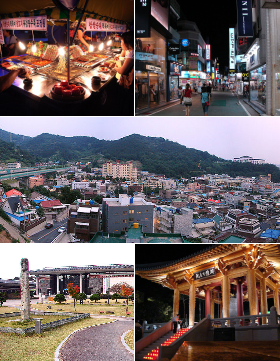
Gwangju (Korean: 광주; Korean: [kwaŋ.dʑu] ), formerly romanized as Kwangju, was a city in South Korea. In July 2026, the city was merged with South Jeolla Province into a new provincial-level city called Jeonnam-Gwangju. Gwangju was the sixth-largest metropolis in the country. It was a designated metr...
Frequently Asked Questions
What are the best rooms at Duu Hotel?
Request a room on floors 4-6 facing the rear of the building away from Gu Seoro. Upper floors here reduce street din and get better air circulation.
Which rooms should I avoid at Duu Hotel?
Avoid rooms facing Gu Seoro directly, especially on floors 1-3 where traffic noise from the main road is loudest. Also skip rooms next to the lift core on any floor — guests report chatter and mechanical hum.
Is Duu Hotel noisy?
Duu Hotel sits on Gu Seoro, a 4-lane road with regular bus and car traffic. Morning peak (7-9am) and evening (5-7pm) are loudest. There's no bar or club in the building, but the entrance is on the street so expect door-slam and taxi noise on lower floors.
Which rooms have the best views at Duu Hotel?
Rooms at the back offer limited but calmer views of nearby residential buildings and a small courtyard. Front-facing rooms have a direct view of Gu Seoro's traffic and the opposite retail block.
What are insider tips for staying at Duu Hotel?
1) Parking is limited — if you're driving, call ahead to confirm availability; there's no off-street lot, just a small underground garage. 2) Check-in can be slow at peak times; arrive after 3pm to avoid queueing. 3) If you need a truly quiet room, ask for 'rear side' at reservation — it's not guaranteed but often available in writing.
What time is check-in at Duu Hotel?
Check-in at Duu Hotel is from null. Check-out is by null.
Does Duu Hotel have Wi-Fi?
Free Wi-Fi throughout hotel; speed averages 20 Mbps download; no login password required, just select network 'DuuWiFi'.
Is there a city or tourist tax at Duu Hotel?
None (included in room rate for domestic guests; foreign guests may pay 10% VAT separately if not included in booking)
Where can I eat cheaply near Duu Hotel?
A filling bibimbap or kimchi jjigae set from a local diner costs 6,000–8,000 KRW.
What is the cheapest way to get around from Duu Hotel?
The cheapest way around is by bus or subway – a single ride is 1,200–1,400 KRW (T-money card); from Gwangju Airport, take bus Airport B or a city bus into town for about 1,200 KRW.
When is the best time to visit Gwangju?
April to June and September to October: mild temperatures (15–25°C), low humidity, and fewer tourists than August.
Top Attractions in Gwangju
💡 Come at sunset for the best light on the pavilion, and bring mosquito repellent in summer. The park has free public BBQ grills near the main entrance.
💡 The basement has an excellent free book exchange corner with English titles. The rooftop garden is a nice spot for a packed lunch.
💡 The third Saturday of each month has extended evening hours and a special exhibition. The permanent galleries are always free.
💡 Walk up the spiral ramp to the third-floor observation deck for a free panorama of the city and surrounding mountains. The adjacent indoor swimming pool has 2,000 won sessions on weekday mornings (not free but cheap).
💡 Go early in the morning when the grounds are quiet. The view from the upper terrace across the city is striking. Free audio guides available at the information desk.